Aren’t Debt and Bad Credit the Same?

Achieving and maintaining financial fitness starts with having the right information. It is important to understand the key components of a healthy financial outlook and how to optimize them to your advantage.

Aren't Debt and Bad Credit the Same?

Among people who are just starting to gain financial literacy, there persists a common misconception that debt means the same thing as ”bad credit.” This is incorrect; these are in fact two very different concepts. However, they are connected and can influence one another. Let’s take a closer look at both debt and poor credit and how they are interrelated.

What Is Debt?

Debt refers to an amount of money borrowed by one party from another. Common forms of debt include auto loans, personal loans, mortgages and credit cards. 

Every form of debt is subject to agreed upon terms and conditions, usually detailed in an agreement. These terms cover a variety of associated topics related to the debt, such as:

  • Interest rates
  • Payment schedule/due dates
  • Methods for repayment
  • Consequences for default/late payments

Interest rates vary depending on your credit history; the higher the risk, generally the higher the interest you will pay back. This ensures that the lender is compensated for the risk they take in lending money to you. 

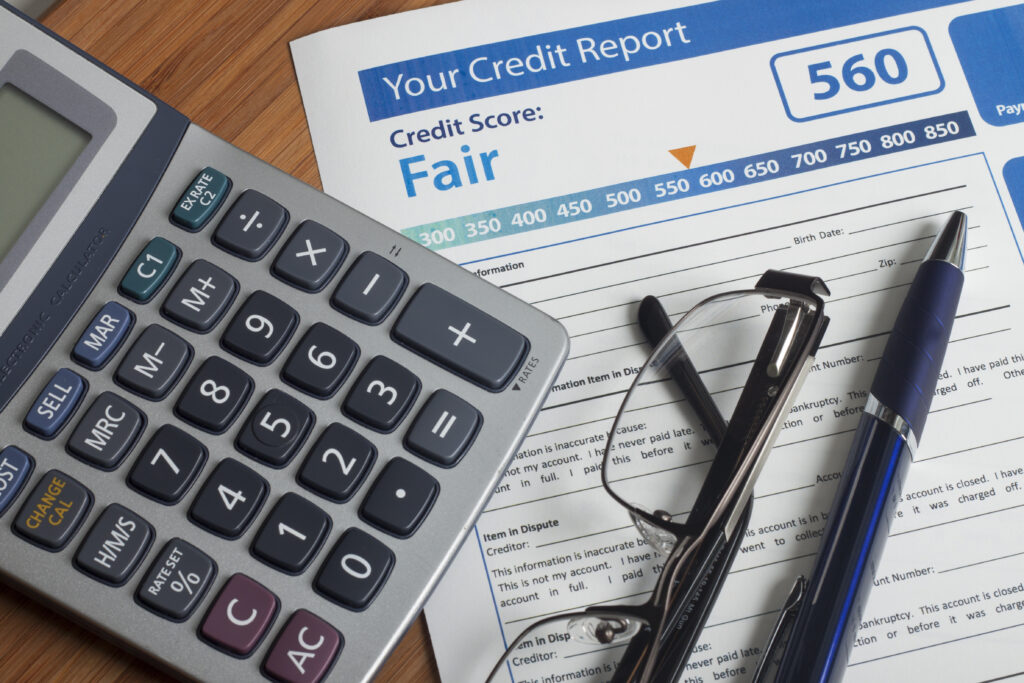
Your risk as a borrower is calculated using your credit report and is generally expressed as a 3-digit credit score. Credit scores can range from 300-850; the lower the number, the higher risk you are to a lender.

What is Poor Credit?

Bad credit or poor credit may be a result of poor debt management over the course of your credit history, which is detailed in your credit report. There are three major credit bureaus that collect and store information about your credit-related financial movements: Experian, TransUnion, and Equifax. This information is then evaluated and weighed by the Fair Isaac Corporation (FICO) to calculate your credit score. Alternative lenders may run a credit check and review credit information from a specialized credit bureau, rather than one of the three major credit bureaus.

A credit report contains information about your past credit obligations, and this can significantly impact your credit score. Things that can lower your credit score include:

  • Defaulting on loans
  • Late payments
  • Having an account sent to collections
  • Bankruptcy
  • Repossession of assets e.g. a vehicle
  • Home foreclosure
  • How much open credit you may or may not have
  • Credit utilization

Essentially, mismanagement of debt in the past makes lenders wary of giving you more debt now. 

A low credit score may not be a barrier to getting an installment loan, but it can make it more difficult. You will likely pay more in interest and other fees, and you may face restrictions on the maximum amount of money you can borrow. For instance, a credit card lender may offer you a card with high interest and capped at a $500 maximum balance until your credit score improves. 

So how does current debt impact your credit score, and how can you use that debt to improve your rating?
Steps to Improve Your Credit Rating

Steps to Improve Your Credit Rating

Debt accounts for around 30% of your credit score. Through responsible handling of your current debt, you can begin raising your credit score, therefore lowering your risk as a borrower. 

Getting your credit score to a better place takes time and effort but is worth it in the end. Here are some basic steps you can do today:

  1. As quickly as possible, pay off outstanding balances that you may have. 
  2. Make sure you pay all bills on time.
  3. Try to never use more than 30% of your available credit. So, if you have a $1,000 line of credit, never use more than $300 of it. 
  4. Obtain a ‘secured’ credit card. Pay the card regularly and on time and your credit score will reflect it quickly.
  5. Create a budget and only spend what you can afford to avoid taking on more debt.
  6. Consider debt consolidation; while this may not lower your score in the short-term, it may be a beneficial long-term solution.

Whatever actions you choose, it’s wise to contact a financial advisor to get the best advice.

Good debt management takes commitment and consistency, and it must be learned just as any other skill. But the result might be a credit rating that will save you money while opening doors of opportunity in the future. 

Recent Posts

What is an Overdraft Line of Credit
How does an overdraft line of credit work? No one wants to deal with the headache of an overdraft fee...
Creative Ways to Save Money
Are you looking to buy a new house or perhaps get a car? Well, you will want to save up some cash.
Why Borrowing Online is So Convenient
Looking for fast cash? Perhaps you need money to consolidate your debt, pay off...

The information provided is for informational purposes only. It should not be considered legal or financial advice. You should consult with an attorney or other professional to determine what may be best for your individual needs. Big Picture Loans disclaims any and all liability in the event any information, commentary, analysis, opinion, advice and/or recommendation prove to be inaccurate, incomplete, unreliable, or result in any other losses. Your use of the information on the website or materials linked from the Web is at your own risk.

The content at any third party site may be subject to copyright or other intellectual property rights, and may not be redistributed without the permission of the third party site owner. Any reference obtained from this blog to a specific product, process, or service does not constitute or imply an endorsement by Big Picture Loans of the product, process, or service, or its producer or provider.

Consumer Notice: Our loans should be used for short-term financial needs only, not as a long-term financial solution. Individuals with credit difficulties should seek credit counseling. For more information, please see our Financial Wellness Page.

Stop wasting time on other loans!

Choose Big Picture Loans and you could get the funds you need immediately after approval*, with no hidden fees.*

IMPORTANT INFORMATION ABOUT PROCEDURES FOR APPLYING FOR A LOAN - To help fight the funding of terrorism and money laundering activities and to comply with Tribal law and the spirit of federal law requiring all financial institutions to obtain, verify and record information that identifies each person who applies for a loan, we will ask for your name, address, date of birth, and other information that will allow us to identify you. we may ask for your driver's license or other identifying documents.


*Big Picture Loans reviews and approves all loans on Tribal land at its office located at E23970 Pow Wow Trail, Watersmeet, MI 49969. If your application is verified and approved we will attempt to send your funds using Real-Time Finding, which can provide instant funding, including on weekends. The exact time your funds appear in your account may vary depending on your bank’s processing times. If your bank does not accept Real-Time Funding, we will automatically send your funds by ACH, which usually posts the next business day (Monday through Friday excluding all federal banking holidays). Big Picture Loans does not charge a fee for Real-Time Funding; check with your banking institution regarding any fees they may charge. Although we work to process applications as quickly as possible, unavoidable delays may occur.


Loan approval and amounts are based on minimum income amounts, other credit criteria, and verification of the information provided during the application process. The Annual Percentage Rate ("APR") may vary based on when your first payment is scheduled, pay frequency, total loan duration, and the amount of your loan. Big Picture Loans, LLC (“Big Picture Loans ®”) will run credit checks on all applications and may review credit information from specialized credit bureaus. Please note submitting a loan application does not mean it was fully approved. If you choose to re-apply for a loan and your circumstances have changed, you may not be approved for the same loan amount.


Big Picture Loans is a wholly owned subsidiary of Tribal Economic Development Holdings, LLC, a wholly owned and operated economic arm and instrumentality of the Lac Vieux Desert Band of Lake Superior Chippewa Indians (“Tribe”), a federally recognized Indian tribe, created for the benefit of the Tribe and operating pursuant to Tribal law. Big Picture Loans is a duly licensed Financial Services Licensee of the Lac Vieux Desert Tribal Financial Services Regulatory Authority, an independent regulatory body of the Tribe, and operates in accordance with the Lac Vieux Desert Band of Lake Superior Chippewa Indians Tribal Consumer Financial Services Regulatory Code, which can be found here: Tribal Consumer Financial Services Regulatory Code.


You can an contact us at support@bigpictureLoans.com or at PO Box 704, Watersmeet, MI 49969-0704. All communications with Big Picture Loans are deemed confidential. Any unauthorized reproduction, distribution, or disclosure is prohibited without Big Picture Loans’ express written consent.


Consumer Notice: Big Picture Loans should be used for short-term financial needs only, not as a long-term financial solution. Individuals with credit difficulties should seek credit counseling. For more information, please see our Financial Wellness page.


If Big Picture Loans approves your loan, it will be governed by Tribal law, applicable federal law and your loan agreement. The laws of your resident state may have interest rate limits and other protective laws that are more favorable. If you wish to have your resident state’s law apply, you should consider taking a loan from a licensed lender in your state. Availability of installment loans are subject to change from time to time as determined by Big Picture Loans. If you have concerns or complaints about your loan, please visit our Tribal Dispute Resolution Procedure page.

© 2026 Big Picture Loans